The Destruction of Gaza is Creating a New Normal to Shame and Frighten Us All

Nancy Lindisfarne and Jonathan Neale write:

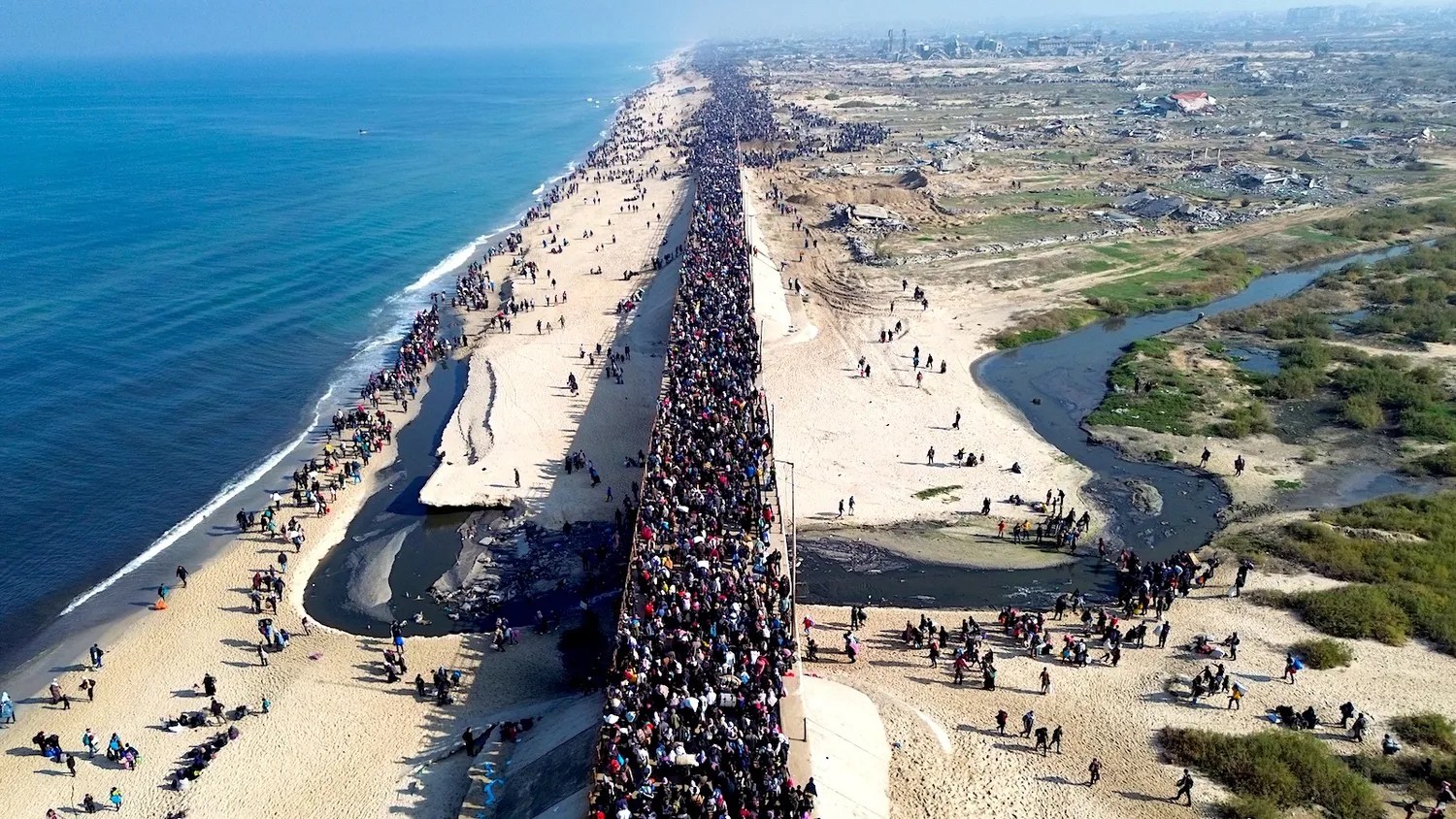
We have been watching the suffering on our phones and screens for almost two years. Now famine is here. Far from the horror, it seems obscene and unbearably self-indulgent to say that Gaza is upsetting. But certainly, many of the rich and powerful of this world seem to want us to feel that way. And perhaps the for them the real point of our distress is to make us feel helpless and fearful.

For many Israelis the point of this vast theatre of cruelty is the extermination, genocide, torture and breaking of the Palestinians. But for the powerful of the world, what matters most is the example and the creation of a new normal. They are showing all the rest of us what can be done to those of us who, even by our very presence, resist. And they think that in future they will have need of this example.

None of the cruelty is new. But easy availability of the images on our phones is new. And the direction global politics is taking is also new.

We are writing this in Massachusetts, sitting at a window looking out over a river in the dawn, safe and warm, two miles from the town of Mashpee. In 1665 the white English settlers of Massachusetts, the pilgrim fathers, went to war with the native people, the Wampanoag. They destroyed every Wampanoag community but the two bands who had converted to Christianity. Mashpee was one of those two communities, and the natives here survive, and are now proud and organized.

There is an account of the burning of a native fortress where people of the Narragansett tribe had offered refuge to fleeing Wampanoag. The white settlers set fire to the wooden fortifications and killed the people one by one as they ran from the flames. The settlers who survived remembered how they had to pray together at the top of their voices to drown out the screams of the burning natives.

Cruelty, conquest, racist wars and genocide are not new. These are old stories. We know people are saying Gaza is not a war, it’s just a one-sided massacre. But many colonial wars have been mostly one-sided massacres.

Children also died in the Nazi holocaust. Children died when the US Air Force created the firestorm over Tokyo and dropped atomic bombs on Hiroshima and Nagasaki.

But the photos and videos we see on our phones are new.

Phones are everywhere now. In Afghanistan they say that the 5G coverage is so good that every shepherd in the mountains has a phone. Of course, they are exaggerating a bit, and many people in many countries try hard not to look at the horrors happening in real time. But in another sense, the whole world is watching Gaza now.

And one thing people in Gaza have been saying over and over is that the people of the world have deserted them.

TWO: WHO’S RESPONSIBLE?

Continue reading

Climate Dispatch from Afghanistan

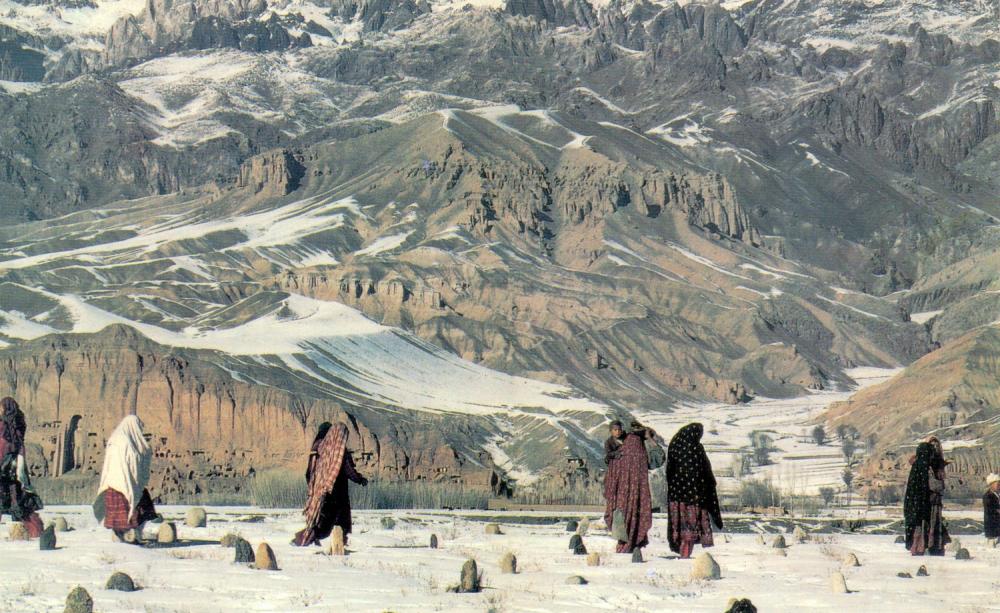
Jonathan Neale writes: Earlier this month I returned to Afghanistan for the first time in 51 years. Back then I had been a young anthropology student doing fieldwork with pastoral nomads. Now I write books and articles on climate breakdown. I had been invited back to give a keynote address at the first International Climate Change Conference in the country. I’ve been to a lot of climate conferences. This one is different.

Continue reading

The Meaning of Ceasefire: Gaza, Genocide, Resistance and Climate Change

Nancy Lindisfarne and Jonathan Neale write: Sooner or later, there will be a ceasefire in Gaza. When it comes, it will be a defeat for Israel. After all, the main goal of Gazans, Palestinians and the global solidarity movement has been a ceasefire. And the ceasefire will come about because of solidarity, resistance and a global mass movement from below.

Continue reading

Working Class Ecosocialism

Stopping Climate Change and Building Another World

Jonathan Neale

This article is about stopping climate change and about fighting for a world based on love and sharing. My argument is that both these projects have to go together. But for either project to work, both climate activists and socialists have to change, fundamentally and fast. And there has to be a deeper change, a change in all humanity. We may well fail. But with these ideas we have a chance.

Continue reading

Palestine and Climate Change: Greta stands with Gaza

Nancy Lindisfarne and Jonathan Neale write: Last week Greta Thunberg posted the picture above on her Twitter (X) account. Many people in the press criticized her because they themselves supported the Israeli bombing and opposed a ceasefire. Some of those people called her, ludicrously, antisemitic. There was also criticism from some climate activists in Germany, Austria and Israel. Beyond that, there was little open criticism from the climate movement, and much support on social media. This is a historic moment for the global climate movement. This article explains why.

Continue reading

WHAT DO WE DO AFTER THE COP?

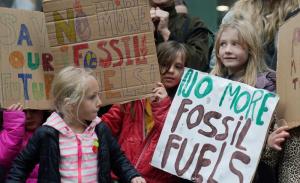
kids-climate

Jonathan Neale

The COP26 United Nations climate conference in Glasgow is the third key moment in the history of the talks. At the Copenhagen COP in 2009 the movement was defeated, and we knew it. At Paris in 2015 the movement was fooled. Both COPs left the movement exhausted and demoralised. This time it is obvious going in that Glasgow will be a shitshow. So this time we need to think going in, how we can come out fighting.

My basic argument is this: the climate movement is at an impasse. The leaders of the world will not act. That means we must build mass movements from below to replace those leaders. But those mass movements will wither if they only protest. We have to fight for action that will halt climate change.

Continue reading

Afghanistan – The Climate Crisis

Nancy Lindisfarne and Jonathan Neale: Last month we wrote about the end of the American occupation of Afghanistan and the Taliban victory.[1] This piece is about climate change in Afghanistan. The topic is urgent. Afghanistan is one of countries in the world most vulnerable to climate change.

This year a long-running drought caused by climate change has reduced the harvest by almost half. Hunger and famine threaten unless Afghans receive a great deal of aid, quickly. But there is the looming danger that US financial sanctions will make aid work impossible and combine with hunger to create economic collapse.

This article begins with the effects of climate change in Afghanistan over the last 50 years. Then we talk about the situation now. We argue that instead of making war for twenty years, the Americans could have worked to create climate jobs and prevent the climate crisis. We end with ideas of what people in other countries can do politically to help Afghans facing climate disaster.

Continue reading

Lithium, Batteries and Climate Change

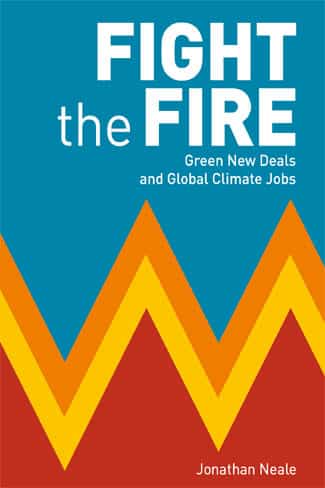
Jonathan Neale writes: I have spent the last year working on a book called Fight the Fire – Green New Deals and Global Climate Jobs. Most of it is about both the politics and the engineering of any possible transition that can avert catastrophic climate breakdown. One thing I had to think about long and hard was lithium and car batteries. [This article was first published by Climate and Capitalism on 11 Feb 2021.]

I often hear people say that we can’t cover the world with electric vehicles, because there simply is not enough lithium for batteries. In any case, they add, lithium production is toxic, and the only supplies are in the Global South. Moreover, so the story goes, there are not enough rare earth metals for wind turbines and all the other hardware we will need for renewable energy.

People often smile after they say those things, which is hard for me to understand, because it means eight billion people will go to hell. So I went and found out about lithium batteries and the uses of rare earth. What I found out is that the transition will be possible, but neither the politics nor the engineering is simple. This article explains why. I start by describing the situation simply, and then add in some of the complexity. Continue reading

Fight the Fire

Jonathan Neale’s new book Fight the Fire – Green New Deals and Global Climate Jobs can be downloaded as a free pdf or a free e-book here. It can be ordered as a paperback for £15 here .

Advance Praise for Fight the Fire

“This is a timely book. At a time when the world is still reeling from the ravages of Covid-19 and the massive economic dislocation that it engendered, now is the perfect time to reinvigorate the campaign for climate jobs, or, as in the case of the Philippines, to launch it. And this book is just what any climate jobs campaigner would need. It provides the big picture, the science and the politics of climate change, as well as the nuts and bolts of how such a campaign would look like. More than that, it is replete with lessons that the author has gained from a life spent fighting in the trenches of various campaigns.” – Josua Mata, Secretary-General, SENTRO union federation, Philippines. Continue reading

Anthropology and Climate Jobs

Nancy Lindisfarne

[Originally published as a letter/comment in Anthropology Today, March 2020.]

The editorial by Thomas Hylland Eriksen (AT Feb 2020, Vol 36, no 1) is a passionate plea for more anthropological engagement in public debates about global warming. His focus is on knowledge – ‘what we can say’ and storytelling – ‘how can we say it?’ His hope is that anthropologists can find ways to intervene more effectively in political debate. I agree and would add that to do so, we need to be willing to take sides, and draw on our anthropological and historical understanding of resistance, social movements and the mechanics of social change (Armbruster & Laerke 2008; Lindisfarne 2010). And in the case of global warming, there is one utterly compelling way to take Eriksen’s plea for action further.

Continue reading

WTF? The morning after Trump’s victory

wtf-1Nancy Lindisfarne and Jonathan Neale write: Trump’s win this morning has left many of us in despair. To prepare ourselves for what is to come, here are some things we need to understand about class struggle, racism and climate change.

First, this vote is a victory for the far right and for racism on a global scale. Second, it is also partly a class revolt against the consequences of neoliberalism. Trump’s appeal to class anger through racism is a tragedy and an obscenity. Continue reading