The Destruction of Gaza is Creating a New Normal to Shame and Frighten Us All

Nancy Lindisfarne and Jonathan Neale write:

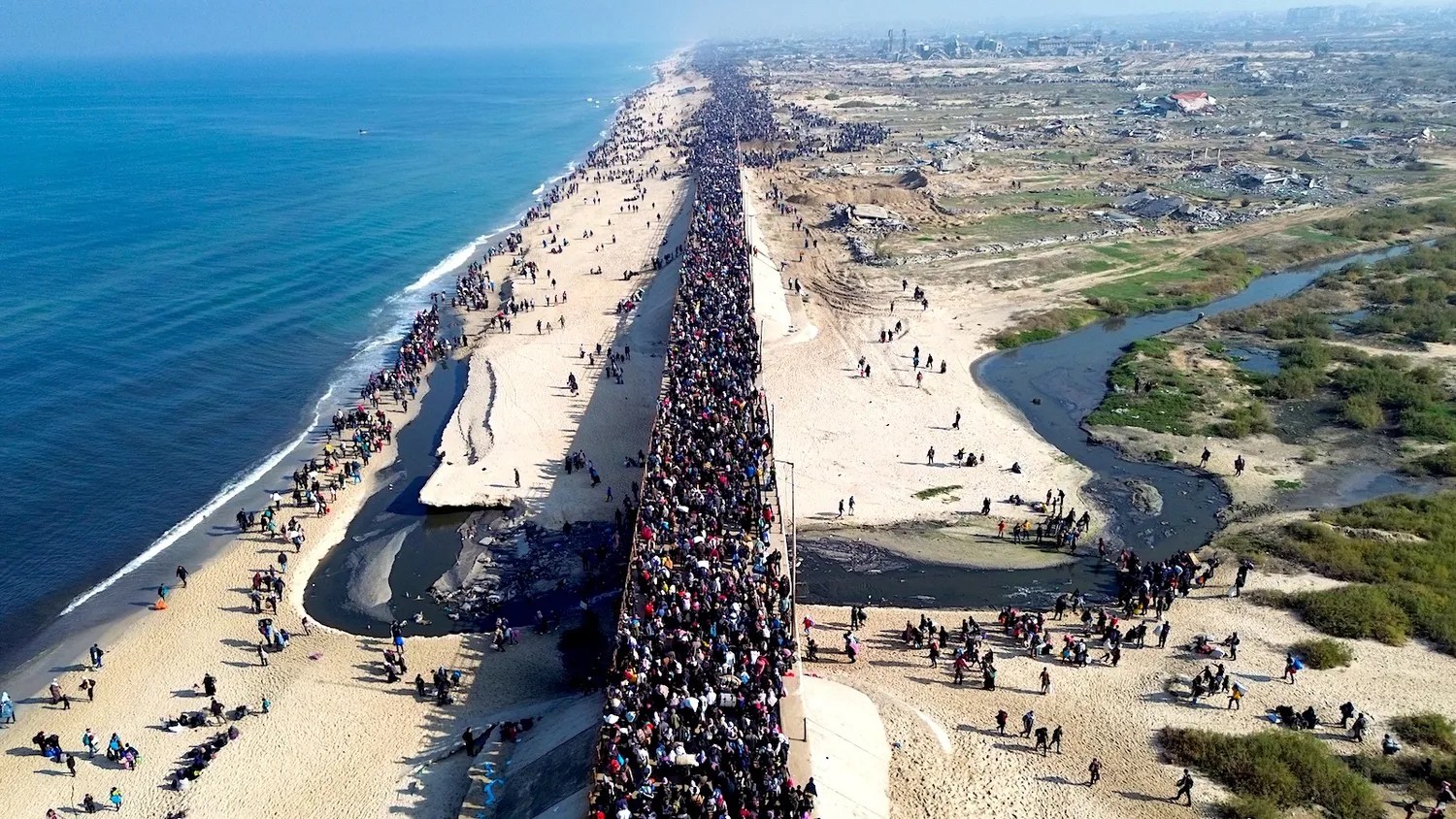
We have been watching the suffering on our phones and screens for almost two years. Now famine is here. Far from the horror, it seems obscene and unbearably self-indulgent to say that Gaza is upsetting. But certainly, many of the rich and powerful of this world seem to want us to feel that way. And perhaps the for them the real point of our distress is to make us feel helpless and fearful.

For many Israelis the point of this vast theatre of cruelty is the extermination, genocide, torture and breaking of the Palestinians. But for the powerful of the world, what matters most is the example and the creation of a new normal. They are showing all the rest of us what can be done to those of us who, even by our very presence, resist. And they think that in future they will have need of this example.

None of the cruelty is new. But easy availability of the images on our phones is new. And the direction global politics is taking is also new.

We are writing this in Massachusetts, sitting at a window looking out over a river in the dawn, safe and warm, two miles from the town of Mashpee. In 1665 the white English settlers of Massachusetts, the pilgrim fathers, went to war with the native people, the Wampanoag. They destroyed every Wampanoag community but the two bands who had converted to Christianity. Mashpee was one of those two communities, and the natives here survive, and are now proud and organized.

There is an account of the burning of a native fortress where people of the Narragansett tribe had offered refuge to fleeing Wampanoag. The white settlers set fire to the wooden fortifications and killed the people one by one as they ran from the flames. The settlers who survived remembered how they had to pray together at the top of their voices to drown out the screams of the burning natives.

Cruelty, conquest, racist wars and genocide are not new. These are old stories. We know people are saying Gaza is not a war, it’s just a one-sided massacre. But many colonial wars have been mostly one-sided massacres.

Children also died in the Nazi holocaust. Children died when the US Air Force created the firestorm over Tokyo and dropped atomic bombs on Hiroshima and Nagasaki.

But the photos and videos we see on our phones are new.

Phones are everywhere now. In Afghanistan they say that the 5G coverage is so good that every shepherd in the mountains has a phone. Of course, they are exaggerating a bit, and many people in many countries try hard not to look at the horrors happening in real time. But in another sense, the whole world is watching Gaza now.

And one thing people in Gaza have been saying over and over is that the people of the world have deserted them.

TWO: WHO’S RESPONSIBLE?

Continue reading

Climate Dispatch from Afghanistan

Jonathan Neale writes: Earlier this month I returned to Afghanistan for the first time in 51 years. Back then I had been a young anthropology student doing fieldwork with pastoral nomads. Now I write books and articles on climate breakdown. I had been invited back to give a keynote address at the first International Climate Change Conference in the country. I’ve been to a lot of climate conferences. This one is different.

Continue reading

The Meaning of Ceasefire: Gaza, Genocide, Resistance and Climate Change

Nancy Lindisfarne and Jonathan Neale write: Sooner or later, there will be a ceasefire in Gaza. When it comes, it will be a defeat for Israel. After all, the main goal of Gazans, Palestinians and the global solidarity movement has been a ceasefire. And the ceasefire will come about because of solidarity, resistance and a global mass movement from below.

Continue reading

WHAT DO WE DO AFTER THE COP?

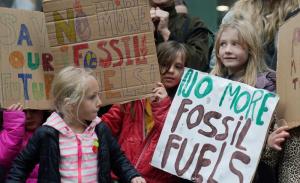
kids-climate

Jonathan Neale

The COP26 United Nations climate conference in Glasgow is the third key moment in the history of the talks. At the Copenhagen COP in 2009 the movement was defeated, and we knew it. At Paris in 2015 the movement was fooled. Both COPs left the movement exhausted and demoralised. This time it is obvious going in that Glasgow will be a shitshow. So this time we need to think going in, how we can come out fighting.

My basic argument is this: the climate movement is at an impasse. The leaders of the world will not act. That means we must build mass movements from below to replace those leaders. But those mass movements will wither if they only protest. We have to fight for action that will halt climate change.

Continue reading

Anthropology and Climate Jobs

Nancy Lindisfarne

[Originally published as a letter/comment in Anthropology Today, March 2020.]

The editorial by Thomas Hylland Eriksen (AT Feb 2020, Vol 36, no 1) is a passionate plea for more anthropological engagement in public debates about global warming. His focus is on knowledge – ‘what we can say’ and storytelling – ‘how can we say it?’ His hope is that anthropologists can find ways to intervene more effectively in political debate. I agree and would add that to do so, we need to be willing to take sides, and draw on our anthropological and historical understanding of resistance, social movements and the mechanics of social change (Armbruster & Laerke 2008; Lindisfarne 2010). And in the case of global warming, there is one utterly compelling way to take Eriksen’s plea for action further.

Continue reading

Oil Empires and Resistance in Afghanistan, Iraq and Syria


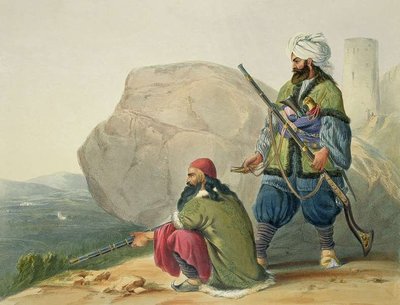
Afghan Resistance, 1842

Afghan Resistance, 1842

Nancy Lindisfarne and Jonathan Neale

This article is about three intersecting wars in the Middle East, in Afghanistan, Iraq and Syria.[1] The bombings in Paris occurred just as we were finishing the piece, and give our arguments here further tragic relevance.

This piece is 25,000 words long, and readers may find it easier to read by downloading the version here: Oil Empires 16Nov2015 FIN5.

It will help the reader to know from the outset where we stand. We want the mass resistance to the Assad regime in Syria to win, and the Russian armed forces and their allies to leave. We want the Americans and their allies to leave Afghanistan, now, completely. We want Assad and the American, British, French and Russian military to stop bombing the Syrian resistance and the Islamic State.[2] Continue reading