From Afghanistan to Ukraine

Nancy Lindisfarne and Jonathan Neale

Six months ago, in a post about the American withdrawal from Afghanistan, we wrote: “This is a turning point in world history. The greatest military power in the world has been defeated by the people of a small, desperately poor, country. This will weaken the power of the American empire all over the world.” The consequences of the American defeat are now playing out in Ukraine. Putin, understanding the weakness of American power, is pushing to change the balance of power further.

Continue reading
Oil Empires and Resistance in Afghanistan, Iraq and Syria


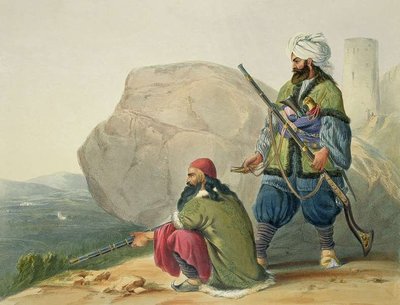
Afghan Resistance, 1842

Afghan Resistance, 1842

Nancy Lindisfarne and Jonathan Neale

This article is about three intersecting wars in the Middle East, in Afghanistan, Iraq and Syria.[1] The bombings in Paris occurred just as we were finishing the piece, and give our arguments here further tragic relevance.

This piece is 25,000 words long, and readers may find it easier to read by downloading the version here: Oil Empires 16Nov2015 FIN5.

It will help the reader to know from the outset where we stand. We want the mass resistance to the Assad regime in Syria to win, and the Russian armed forces and their allies to leave. We want the Americans and their allies to leave Afghanistan, now, completely. We want Assad and the American, British, French and Russian military to stop bombing the Syrian resistance and the Islamic State.[2] Continue reading

Thinking about Feminism and Islamophobia 6: The Class Basis of the Taliban

Taliban reader

Nancy Lindisfarne writes: In understanding the Taliban we need to face up honestly to two quite different things. First, the Taliban are on the side of the poor . Most of their supporters come from the poor. The leaders of the Taliban are themselves from among the poor. (In this they are unlike most other Islamist groups.) And when they take power in an area the life circumstances of the poor improve significantly. These are the reasons why many ordinary people support the Taliban.

But there is another truth: the Taliban are also conservative in their sexual politics, and their policies oppress women. This is one of the things most ordinary Afghans and Pakistani Pashtuns don’t like about the Taliban.

Both these things are true. We need to face up to this contradictory reality. So we need to explain the situation in some detail. This post is an academic – but readable – paper explaining the class background of the Taliban. In another post, we shall turn to their right wing gender politics. Continue reading

Thinking about Feminism and Islamophobia (3) The new grand alliance in the Middle East

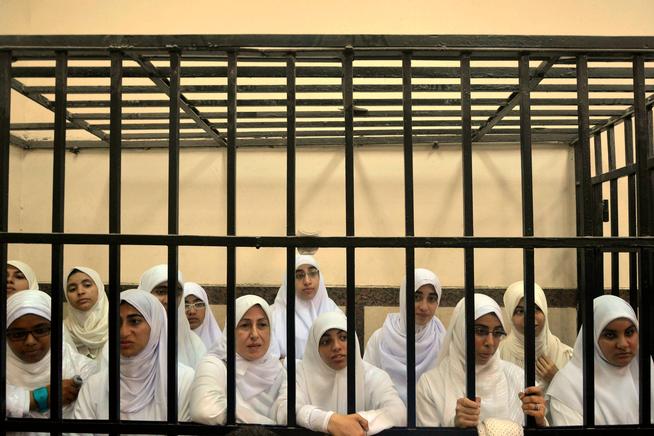
Women defendants at a mass trial of supporters of the Muslim Brotherhood in Alexandria, Egypt, November 2013

Nancy Lindisfarne and Jonathan Neale explain the changing international alliances in Middle Eastern politics, and how this is connected to rising Islamophobia in Europe.

In most of Europe and North America now there is only one acceptable form of racism: prejudice against Muslims. This is recent. Until 1978 in most of Europe and North America Muslims were often discriminated against because they were Asian, or Arabs, or people of colour. But in the US, Britain and many other countries they were not singled out for their religion. Continue reading