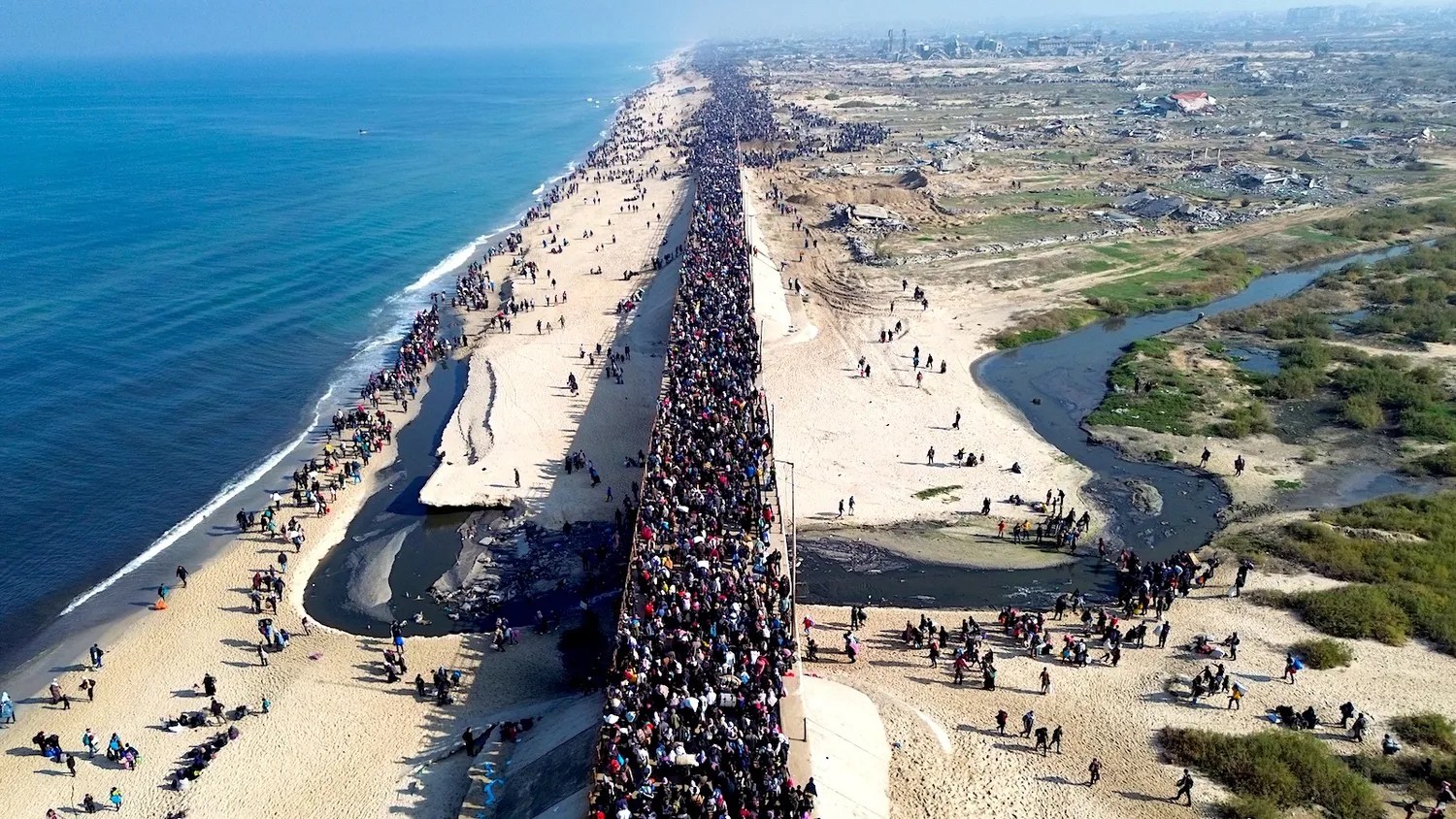
Nancy Lindisfarne and Jonathan Neale write:
We have been watching the suffering on our phones and screens for almost two years. Now famine is here. Far from the horror, it seems obscene and unbearably self-indulgent to say that Gaza is upsetting. But certainly, many of the rich and powerful of this world seem to want us to feel that way. And perhaps the for them the real point of our distress is to make us feel helpless and fearful.
For many Israelis the point of this vast theatre of cruelty is the extermination, genocide, torture and breaking of the Palestinians. But for the powerful of the world, what matters most is the example and the creation of a new normal. They are showing all the rest of us what can be done to those of us who, even by our very presence, resist. And they think that in future they will have need of this example.
None of the cruelty is new. But easy availability of the images on our phones is new. And the direction global politics is taking is also new.
We are writing this in Massachusetts, sitting at a window looking out over a river in the dawn, safe and warm, two miles from the town of Mashpee. In 1665 the white English settlers of Massachusetts, the pilgrim fathers, went to war with the native people, the Wampanoag. They destroyed every Wampanoag community but the two bands who had converted to Christianity. Mashpee was one of those two communities, and the natives here survive, and are now proud and organized.
There is an account of the burning of a native fortress where people of the Narragansett tribe had offered refuge to fleeing Wampanoag. The white settlers set fire to the wooden fortifications and killed the people one by one as they ran from the flames. The settlers who survived remembered how they had to pray together at the top of their voices to drown out the screams of the burning natives.
Cruelty, conquest, racist wars and genocide are not new. These are old stories. We know people are saying Gaza is not a war, it’s just a one-sided massacre. But many colonial wars have been mostly one-sided massacres.
Children also died in the Nazi holocaust. Children died when the US Air Force created the firestorm over Tokyo and dropped atomic bombs on Hiroshima and Nagasaki.
But the photos and videos we see on our phones are new.
Phones are everywhere now. In Afghanistan they say that the 5G coverage is so good that every shepherd in the mountains has a phone. Of course, they are exaggerating a bit, and many people in many countries try hard not to look at the horrors happening in real time. But in another sense, the whole world is watching Gaza now.
And one thing people in Gaza have been saying over and over is that the people of the world have deserted them.
TWO: WHO’S RESPONSIBLE?
Continue reading


 Anne Bonny Pirate